The Comparative Analysis :
Ford Focus 2.0 TDCi Powershift (14 - 18) vs. Hyundai IONIQ Electro (16 - 19)
€ 28,400

€ 33,300
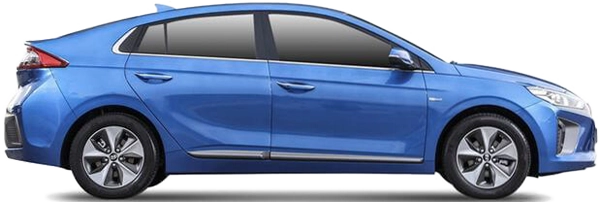
€ 28,400
Base Price ⓘBase price of a new vehicle with standard equipment in Germany at market launch.
€ 33,300
ⓘBase price of a new vehicle with standard equipment in Germany at market launch. Price Info

Vehicle Dimensions
The dimensions of these vehicles differ slightly. The Ford Focus 2.0 TDCi Start/Stopp is 11 cm shorter, 0.3 cm wider and 1.9 cm taller than the Hyundai IONIQ Elektro.
Ford Focus 2.0 TDCi Start/Stopp
Hyundai IONIQ Elektro
1469

1823
2015
1450

1820
2060
1823 mm
Width
1820 mm
2015 mm
Width Incl. Mirrors
2060 mm
1469 mm
Height
1450 mm

2650
4360

2700
4470
4360 mm
Length
4470 mm
2650 mm
Wheelbase
2700 mm
Vehicle Weight
Ford Focus 2.0 TDCi Start/Stopp
Hyundai IONIQ Elektro
1455 kg
Kerb Weight
1495 kg
2050 kg
Gross Vehicle
Weight
1880 kg
Weight Difference:
40 kg
2.68 %

General
Ford Focus 2.0 TDCi Start/Stopp
Hyundai IONIQ Elektro
DYB
Generation
AE
Hatchback
Car Body Style
Hatchback
Diesel
Fuel Type
Electricity

Front-wheel drive
Drive
Front-wheel drive
6-speed dual clutch transmission
Transmission
1-speed automatic transmission
Engine
Ford Focus 2.0 TDCi Start/Stopp
Hyundai IONIQ Elektro
Straight-four diesel engine with turbocharger
Engine Type
Permanent magnet synchronous motor
4
Valves
0
4
Cylinders
0
1997 CC
Engine Capacity
0 CC
148 bhp
at 3500 rpm
Power
118 bhp
at 6000 rpm
Ford Focus 2.0 TDCi Start/Stopp
148 bhp
118 bhp
Hyundai IONIQ Elektro
370 NM
at 2000 rpm
Max. Torque
295 NM
at 3500 rpm
Ford Focus 2.0 TDCi Start/Stopp
370 NM
295 NM
Hyundai IONIQ Elektro
Performance
Ford Focus 2.0 TDCi Start/Stopp
Hyundai IONIQ Elektro
129 mph
Maximum Speed
103 mph
8.7 sec
Acceleration 0 to 62 mph
9.9 sec
62 mph
62
mph
121 m
0.000 sec

Ford Focus 2.0 TDCi Start/Stopp
62 mph
62
mph
138 m
0.000 sec

Hyundai IONIQ Elektro
▶ REPLAY
9.83 kg/bhp
Weight-to-Power Ratio
12.67 kg/bhp
Ford Focus 2.0 TDCi Start/Stopp
9.83 kg/bhp
12.67 kg/bhp
Hyundai IONIQ Elektro
Fuel Economy / Emissions
Ford Focus 2.0 TDCi Start/Stopp
Hyundai IONIQ Elektro
Fuel Economy
64 mpg
( 72 MPGe ⓘ Miles per gallon petrol equivalent (MPGe) is a measure of the average distance traveled per unit of energy consumed. MPGe, specified in miles per imperial gallon (~4.546 litres), is used to compare the energy consumption of vehicles that use different energy sources.)
combined ✽ per 100 miles
19 kWh✽
( 216 MPGe ⓘ Miles per gallon petrol equivalent (MPGe) is a measure of the average distance traveled per unit of energy consumed. MPGe, specified in miles per imperial gallon (~4.546 litres), is used to compare the energy consumption of vehicles that use different energy sources.)
Ford Focus 2.0 TDCi Start/Stopp
72 MPGe
216 MPGe
Hyundai IONIQ Elektro
54 mpg
city
No data
71 mpg
motorway
No data
60 L
Fuel Tank Capacity
28 kWh
848 mi
Range
151 mi
Ford Focus 2.0 TDCi Start/Stopp
848 mi
151 mi
Hyundai IONIQ Elektro
Environmental Impact
90.4 kWh
Total Energy Consumption
per 100 miles ⓘThe total energy consumption per 100 miles is the amount of energy consumed by a vehicle when burning fuel or using electricity per 100 miles (final energy), and the energy required to produce the appropriate amount of fuel or electricity (primary energy).
37.3 kWh
Ford Focus 2.0 TDCi Start/Stopp
90.4 kWh
37.3 kWh
Hyundai IONIQ Elektro
Euro 6b (NEFZ)
Emission Standard
Elektrofahrzeug
115 g/km (NEFZ)
CO2 Emissions
0 g/km (WLTP)
Practical Convenience
Ford Focus 2.0 TDCi Start/Stopp
Hyundai IONIQ Elektro
5
Doors
5
5
No. of Seats
5
595 kg
Maximum Payload
385 kg
363 L
Boot Capacity
350 L


1262 L
Boot Capacity (Seats Down)
1410 L