Die Vergleichsanalyse :
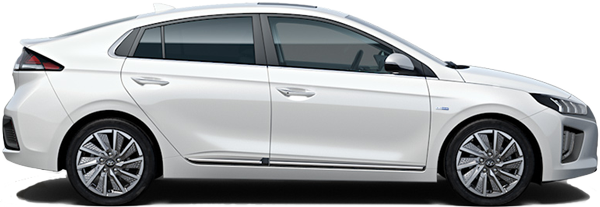
Hyundai IONIQ Elektro (19 - ..) vs. Ford Focus 1.5 EcoBoost (14 - 18)
34.900 €
24.100 €

34.900 €
Grundpreis ⓘListenpreis für das Basismodell (Standardausstattung ohne Extras) zum Zeitpunkt der Markteinführung in Deutschland.
24.100 €
ⓘListenpreis für das Basismodell (Standardausstattung ohne Extras) zum Zeitpunkt der Markteinführung in Deutschland. Preisinfo

Abmessungen
Die Abmessungen dieser Fahrzeuge unterscheiden sich etwas voneinander. Der Hyundai IONIQ Elektro ist 11 cm länger, 0.3 cm schmaler und 1.9 cm niedriger als der Ford Focus 1.5 EcoBoost Start/Stopp.
Hyundai IONIQ Elektro
Ford Focus 1.5 EcoBoost Start/Stopp
1450

1820
2060
1469

1823
2015
1820 mm
Breite
1823 mm
2060 mm
Breite mit Spiegeln
2015 mm
1450 mm
Höhe
1469 mm

2700
4470

2650
4360
4470 mm
Länge
4360 mm
2700 mm
Radstand
2650 mm
Gewicht
Hyundai IONIQ Elektro
Ford Focus 1.5 EcoBoost Start/Stopp
1495 kg
Leergewicht
1325 kg
1880 kg
Zulässiges
Gesamtgewicht
Gesamtgewicht
1900 kg
Gewichtsdifferenz:
170 kg
11.37 %

Allgemein
Hyundai IONIQ Elektro
Ford Focus 1.5 EcoBoost Start/Stopp
AE
Baureihe
DYB
Schrägheck
Karosserie
Schrägheck
Strom
Kraftstoff
Super (ROZ 95)

Frontantrieb
Antrieb
Frontantrieb
1-Gang-Automatikgetriebe
Getriebe
6-Gang-Schaltgetriebe
Motor
Hyundai IONIQ Elektro
Ford Focus 1.5 EcoBoost Start/Stopp
Permanentmagnet-Synchronmaschine (PSM)
Motorbauart
Reihenvierzylinder-Benziner mit Turboaufladung
0
Ventile
4
0
Zylinder
4
0 cm³
Hubraum
1498 cm³
136 PS
bei 6000 U/min
Leistung
150 PS
bei 6000 U/min
Hyundai IONIQ Elektro
136 PS
150 PS
Ford Focus 1.5 EcoBoost Start/Stopp
295 Nm
bei 3500 U/min
Drehmoment
240 Nm
bei 1600 U/min
Hyundai IONIQ Elektro
295 Nm
240 Nm
Ford Focus 1.5 EcoBoost Start/Stopp
Leistungsfähigkeit
Hyundai IONIQ Elektro
Ford Focus 1.5 EcoBoost Start/Stopp
165 km/h
Höchstgeschwindigkeit
210 km/h
9.9 s
Beschleunigung 0 – 100 km/h
8.9 s
100 km/h
100
km/h
km/h
138 m
0.000 s

Hyundai IONIQ Elektro
100 km/h
100
km/h
km/h
124 m
0.000 s

Ford Focus 1.5 EcoBoost Start/Stopp
▶ REPLAY
10.99 kg/PS
Leistungsgewicht
8.83 kg/PS
Hyundai IONIQ Elektro
10.99 kg/PS
8.83 kg/PS
Ford Focus 1.5 EcoBoost Start/Stopp
Verbrauch / Umwelt
Hyundai IONIQ Elektro
Ford Focus 1.5 EcoBoost Start/Stopp
Verbrauch pro 100 km
Кeine Daten
kombiniert
5.5 L
Hyundai IONIQ Elektro
LBÄ
5.5 L
Ford Focus 1.5 EcoBoost Start/Stopp
Кeine Daten
innerorts
7 L
Кeine Daten
außerorts
4.6 L
38 kWh
Tankgröße
55 L
Кeine Daten
Reichweite
1000 km
Hyundai IONIQ Elektro
km
1000 km
Ford Focus 1.5 EcoBoost Start/Stopp
Auswirkung auf die Umwelt
Кeine Daten
Gesamtenergieverbrauch
pro 100 km ⓘDer Gesamtenergieverbrauch pro 100 km ergibt sich aus der Energie, die ein Fahrzeug bei der Verbrennung eines Treibstoffs (bzw. bei der Verwendung von Strom) pro 100 km verbraucht (Endenergie) und der Energie, die für die Erzeugung und Bereitstellung entsprechender Menge Treibstoffs (bzw. Stroms) benötigt wird (Primärenergie). Dabei werden auch die Vorprozesse der Treibstoffherstellung, der Transport eines Treibstoffs bis zur Tankstelle (bzw. der Transport des Stroms bis zur Steckdose) und die Verluste, die dabei auftreten, berücksichtigt. Der Gesamtenergieverbrauch ermöglicht somit einen Vergleich der Energieeffizienz von Fahrzeugen mit verschiedenen Antriebssystemen.
pro 100 km ⓘDer Gesamtenergieverbrauch pro 100 km ergibt sich aus der Energie, die ein Fahrzeug bei der Verbrennung eines Treibstoffs (bzw. bei der Verwendung von Strom) pro 100 km verbraucht (Endenergie) und der Energie, die für die Erzeugung und Bereitstellung entsprechender Menge Treibstoffs (bzw. Stroms) benötigt wird (Primärenergie). Dabei werden auch die Vorprozesse der Treibstoffherstellung, der Transport eines Treibstoffs bis zur Tankstelle (bzw. der Transport des Stroms bis zur Steckdose) und die Verluste, die dabei auftreten, berücksichtigt. Der Gesamtenergieverbrauch ermöglicht somit einen Vergleich der Energieeffizienz von Fahrzeugen mit verschiedenen Antriebssystemen.
64.7 kWh
Hyundai IONIQ Elektro
0 kWh
64.7 kWh
Ford Focus 1.5 EcoBoost Start/Stopp
Elektrofahrzeug
Schadstoffklasse
Euro 6b (NEFZ)
0 g/km (WLTP)
CO2-Emissionen
127 g/km (NEFZ)
Alltagsnutzen
Hyundai IONIQ Elektro
Ford Focus 1.5 EcoBoost Start/Stopp
5
Türen
5
5
Sitzplätze
5
385 kg
Maximale Zuladung
575 kg
357 L
Kofferraumvolumen
363 L


1417 L
Stauraum mit umgeklappter
Rücksitzbank
Rücksitzbank
1262 L