The Comparative Analysis :
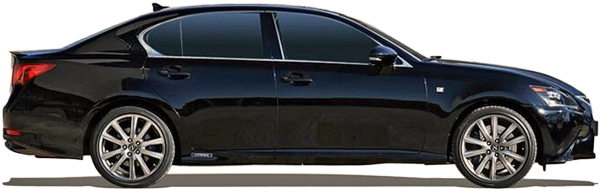
Lexus GS 200t Automatic (16 - 18) vs. Lexus GS 300 Automatic (05 - 10)
€ 46,200
€ 44,100

€ 46,200
Base Price ⓘBase price of a new vehicle with standard equipment in Germany at market launch.
€ 44,100
ⓘBase price of a new vehicle with standard equipment in Germany at market launch. Price Info

Vehicle Dimensions
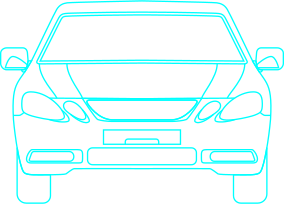
The GS 200t is slightly bigger in every dimension. It's 2.2 inches longer, 0.8 inches wider and an inch taller than the GS 300.
GS 200t
GS 300
57.3

72.4
82.1
56.3
71.7
79.5
72.4 in
Width
71.7 in
82.1 in
Width Incl. Mirrors
79.5 in
57.3 in
Height
56.3 in

112.4
192.1

112.2
190
192.1 in
Length
190 in
112.4 in
Wheelbase
112.2 in
Vehicle Weight
GS 200t
GS 300
3847 lb
Curb Weight
3737 lb
4784 lb
Gross Vehicle
Weight
Weight
4685 lb
Weight Difference:
110 lb
2.86 %

General
GS 200t
GS 300
L10
Generation
S19
Sedan
Car Body Style
Sedan
Mid-Grade Unleaded
Fuel Type
Mid-Grade Unleaded

Rear-wheel drive
Drivetrain
Rear-wheel drive
8-speed automatic transmission
Transmission
6-speed automatic transmission
Engine
GS 200t
GS 300
Straight-four gasoline engine with turbocharger
Engine Type
V6 gasoline engine (naturally aspirated engine)
4
Valves
4
4
Cylinders
6
2 L / 98 cu in
Displacement
3 L / 147 cu in
242 hp
at 5800 rpm
Power
246 hp
at 6200 rpm
GS 200t
242 hp
246 hp
GS 300
258 lb‑ft
at 1650 rpm
Max. Torque
229 lb‑ft
at 3500 rpm
GS 200t
258 lb‑ft
229 lb‑ft
GS 300
Performance
GS 200t
GS 300
143 mph
Maximum Speed
149 mph
7.3 sec
Acceleration 0 to 62 mph
7.2 sec
62 mph
62
mph
mph
331 ft
0.000 sec

GS 200t
62 mph
62
mph
mph
328 ft
0.000 sec

GS 300
▶ REPLAY
15.9 lb/hp
Weight-to-Power Ratio
15.19 lb/hp
GS 200t
15.9 lb/hp
15.19 lb/hp
GS 300
Fuel Economy / Emissions
GS 200t
GS 300
Fuel Economy
30 mpg
combined
24 mpg
GS 200t
30 mpg
24 mpg
GS 300
21 mpg
city
16 mpg
39 mpg
highway
33 mpg

17.4 gal
Fuel Tank Capacity
18.8 gal
519 mi
Range
450 mi
GS 200t
519 mi
450 mi
GS 300
Environmental Impact
149.7 kWh
Total Energy Consumption
per 100 miles ⓘThe total energy consumption per 100 miles is the amount of energy consumed by a vehicle when burning fuel or using electricity per 100 miles (final energy), and the energy required to produce the appropriate amount of fuel or electricity (primary energy).
per 100 miles ⓘThe total energy consumption per 100 miles is the amount of energy consumed by a vehicle when burning fuel or using electricity per 100 miles (final energy), and the energy required to produce the appropriate amount of fuel or electricity (primary energy).
185.7 kWh
GS 200t
149.7 kWh
185.7 kWh
GS 300
Euro 6b (NEFZ)
Emission Standard
Euro 4
295 g/mi (NEFZ)
CO2 Emissions
373 g/mi (NEFZ)
Practical Convenience
GS 200t
GS 300
4
Doors
4
5
No. of Seats
5
937 lb
Maximum Payload
948 lb
13.3 cu ft
Trunk Volume
12.2 cu ft


No data
Cargo Volume (Seats Down)
No data