The Comparative Analysis :
Lexus GS 300h Automatic (15 - 18) vs. Lexus GS 250 Automatic (12 - 13)
€ 47,100

€ 45,200
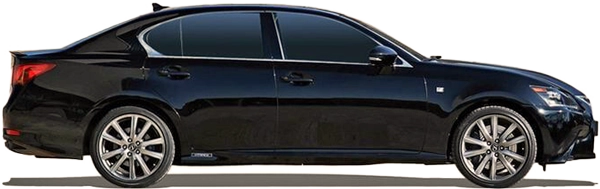
€ 47,100
Base Price ⓘBase price of a new vehicle with standard equipment in Germany at market launch.
€ 45,200
ⓘBase price of a new vehicle with standard equipment in Germany at market launch. Price Info

Vehicle Dimensions
Тhere is barely any difference in dimensions between the two vehicles. Both cars are the same width and height, but the GS 300h is 3 cm longer.
GS 300h
GS 250
1455

1840
2085
1455

1840
2085
1840 mm
Width
1840 mm
2085 mm
Width Incl. Mirrors
2085 mm
1455 mm
Height
1455 mm

2855
4880

2855
4850
4880 mm
Length
4850 mm
2855 mm
Wheelbase
2855 mm
Vehicle Weight
GS 300h
GS 250
1770 kg
Kerb Weight
1715 kg
2235 kg
Gross Vehicle
Weight
Weight
2170 kg
Weight Difference:
55 kg
3.11 %
General
GS 300h
GS 250
L10
Generation
L10
Saloon
Car Body Style
Saloon
Unleaded (95 RON)
Fuel Type
Unleaded (95 RON)

Rear-wheel drive
Drive
Rear-wheel drive
Continuously variable transmission (CVT)
Transmission
6-speed automatic transmission
Engine
GS 300h
GS 250
4-cylinder full hybrid petrol engine (naturally aspirated engine)
Engine Type
V6 petrol engine (naturally aspirated engine)
4
Valves
4
4
Cylinders
6
2494 CC
Engine Capacity
2500 CC
220 bhp
at 0 rpm
Power
206 bhp
at 6400 rpm
GS 300h
220 bhp
206 bhp
GS 250
No data
Max. Torque
253 NM
at 4800 rpm
GS 300h
NM
253 NM
GS 250
Performance
GS 300h
GS 250
118 mph
Maximum Speed
140 mph
9 sec
Acceleration 0 to 62 mph
8.6 sec
62 mph
62
mph
mph
125 m
0.000 sec

GS 300h
62 mph
62
mph
mph
119 m
0.000 sec
GS 250
▶ REPLAY
8.05 kg/bhp
Weight-to-Power Ratio
8.33 kg/bhp
GS 300h
8.05 kg/bhp
8.33 kg/bhp
GS 250
Fuel Economy / Emissions
GS 300h
GS 250
Fuel Economy
64 mpg
combined
31 mpg
GS 300h
64 mpg
31 mpg
GS 250
61 mpg
city
23 mpg
66 mpg
motorway
41 mpg

66 L
Fuel Tank Capacity
66 L
932 mi
Range
450 mi
GS 300h
932 mi
450 mi
GS 250
Environmental Impact
83.4 kWh
Total Energy Consumption
per 100 miles ⓘThe total energy consumption per 100 miles is the amount of energy consumed by a vehicle when burning fuel or using electricity per 100 miles (final energy), and the energy required to produce the appropriate amount of fuel or electricity (primary energy).
per 100 miles ⓘThe total energy consumption per 100 miles is the amount of energy consumed by a vehicle when burning fuel or using electricity per 100 miles (final energy), and the energy required to produce the appropriate amount of fuel or electricity (primary energy).
172.4 kWh
GS 300h
83.4 kWh
172.4 kWh
GS 250
Euro 6b (NEFZ)
Emission Standard
Euro 5
104 g/km (NEFZ)
CO2 Emissions
207 g/km (NEFZ)
Practical Convenience
GS 300h
GS 250
4
Doors
4
5
No. of Seats
5
465 kg
Maximum Payload
455 kg
468 L
Boot Capacity
520 L


No data
Boot Capacity (Seats Down)
No data