The Comparative Analysis :
Hyundai IONIQ Electro (16 - 19) vs. Nissan Leaf 30 kWh (15 - 17)
€ 33,300

€ 31,300
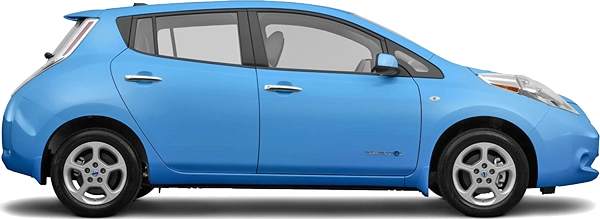
€ 33,300
Base Price ⓘBase price of a new vehicle with standard equipment in Germany at market launch.
€ 31,300
ⓘBase price of a new vehicle with standard equipment in Germany at market launch. Price Info

Vehicle Dimensions
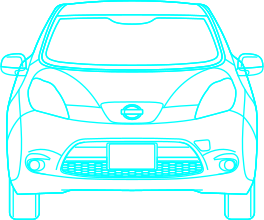
The dimensions of these vehicles differ slightly. The Hyundai IONIQ Elektro is 2.5 cm longer, 5 cm wider and 10 cm lower than the Nissan Leaf (30 kWh).
Hyundai IONIQ Elektro
Nissan Leaf (30 kWh)
1450

1820
2060
1550
1770
1970
1820 mm
Width
1770 mm
2060 mm
Width Incl. Mirrors
1970 mm
1450 mm
Height
1550 mm

2700
4470

2700
4445
4470 mm
Length
4445 mm
2700 mm
Wheelbase
2700 mm
Vehicle Weight
Hyundai IONIQ Elektro
Nissan Leaf (30 kWh)
1495 kg
Kerb Weight
1605 kg
1880 kg
Gross Vehicle
Weight
Weight
1970 kg
Weight Difference:
110 kg
6.85 %
General
Hyundai IONIQ Elektro
Nissan Leaf (30 kWh)
AE
Generation
ZE0
Hatchback
Car Body Style
Hatchback
Electricity
Fuel Type
Electricity

Front-wheel drive
Drive
Front-wheel drive
1-speed automatic transmission
Transmission
1-speed automatic transmission
Engine
Hyundai IONIQ Elektro
Nissan Leaf (30 kWh)
Permanent magnet synchronous motor
Engine Type
Electrically excited synchronous motor
0
Valves
0
0
Cylinders
0
0 CC
Engine Capacity
0 CC
118 bhp
at 6000 rpm
Power
108 bhp
at 0 rpm
Hyundai IONIQ Elektro
118 bhp
108 bhp
Nissan Leaf (30 kWh)
295 NM
at 3500 rpm
Max. Torque
254 NM
at 0 rpm
Hyundai IONIQ Elektro
295 NM
254 NM
Nissan Leaf (30 kWh)
Performance
Hyundai IONIQ Elektro
Nissan Leaf (30 kWh)
103 mph
Maximum Speed
89 mph
9.9 sec
Acceleration 0 to 62 mph
11.5 sec
62 mph
62
mph
mph
138 m
0.000 sec

Hyundai IONIQ Elektro
62 mph
62
mph
mph
160 m
0.000 sec

Nissan Leaf (30 kWh)
▶ REPLAY
12.67 kg/bhp
Weight-to-Power Ratio
14.86 kg/bhp
Hyundai IONIQ Elektro
12.67 kg/bhp
14.86 kg/bhp
Nissan Leaf (30 kWh)
Fuel Economy / Emissions
Hyundai IONIQ Elektro
Nissan Leaf (30 kWh)
Fuel Economy
19 kWh
( 216 MPGe ⓘ Miles per gallon petrol equivalent (MPGe) is a measure of the average distance traveled per unit of energy consumed. MPGe, specified in miles per imperial gallon (~4.546 litres), is used to compare the energy consumption of vehicles that use different energy sources.)
combined per 100 miles
24 kWh
( 166 MPGe ⓘ Miles per gallon petrol equivalent (MPGe) is a measure of the average distance traveled per unit of energy consumed. MPGe, specified in miles per imperial gallon (~4.546 litres), is used to compare the energy consumption of vehicles that use different energy sources.)
Hyundai IONIQ Elektro
216 MPGe
166 MPGe
Nissan Leaf (30 kWh)
No data
city
No data
No data
motorway
No data

28 kWh
Fuel Tank Capacity
30 kWh
151 mi
Range
124 mi
Hyundai IONIQ Elektro
151 mi
124 mi
Nissan Leaf (30 kWh)
Environmental Impact
37.3 kWh
Total Energy Consumption
per 100 miles ⓘThe total energy consumption per 100 miles is the amount of energy consumed by a vehicle when burning fuel or using electricity per 100 miles (final energy), and the energy required to produce the appropriate amount of fuel or electricity (primary energy).
per 100 miles ⓘThe total energy consumption per 100 miles is the amount of energy consumed by a vehicle when burning fuel or using electricity per 100 miles (final energy), and the energy required to produce the appropriate amount of fuel or electricity (primary energy).
48.8 kWh
Hyundai IONIQ Elektro
37.3 kWh
48.8 kWh
Nissan Leaf (30 kWh)
Elektrofahrzeug
Emission Standard
Elektrofahrzeug
0 g/km (WLTP)
CO2 Emissions
0 g/km (NEFZ)
Practical Convenience
Hyundai IONIQ Elektro
Nissan Leaf (30 kWh)
5
Doors
5
5
No. of Seats
5
385 kg
Maximum Payload
365 kg
350 L
Boot Capacity
370 L


1410 L
Boot Capacity (Seats Down)
720 L